
What Set Off the Hot Pot Bomb on Asian TikTok?
By Kelli Luu | 19 Feb, 2026
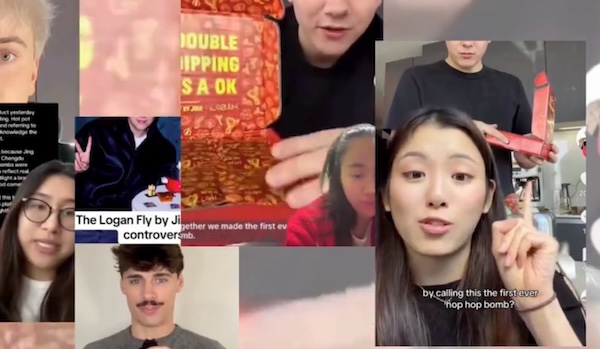
A collaboration between Fly By Jing and food influencer Logan Moffitt sparked a furor after their product was introduced as the “first ever hot pot bomb”.
© 2026 by Asian Media Group Inc.
Another viral controversy has struck Asian TikTok and again, it revolves around Asian cuisine. What was meant to be a highly profitable collaboration turned into a heated online debate about the way Western creators talk about Asian foods.
Earlier in February, TikTok food influencer Logan Moffitt teamed up on a collaboration with Fly By Jing, a modern Sichuan food brand founded by Jing Gao. Together they created a new product called the Hot Pot Bomb which essentially was a compact cube of hot pot broth base so anyone could easily make at-home hot pot.
In the promotional video Logan uploaded to his 7.2 million TikTok followers, he described this product as the “first ever hot pot bomb”. This line did not sit well with many other Asian food creators and just the community overall. Immediately, users were commenting photos of hot pot bases and soup cube products that have existed in Asian grocery stores for years. Hot pot itself has simply been an old dining tradition across Asia, so when Logan called this product the “first ever”, it felt more like erasure yet again rather than innovation.
Most of the criticism revolved around the discussion of who should be seen as the “inventor”. Fly By Jing is a brand built on the celebration of Chinese culinary traditions, yet the face of the product launch was a white creator who introduced hot pot to millions of people as if it was brand new. TikTok users flooded the For You Page with discussions about Asian cuisines becoming mainstream only after being shared by Western influencers and some suggested that Fly By Jing should have collaborated with an Asian creator instead.
Logan later deleted the original post and put out a statement acknowledging that his wording was misleading and clarified that hot pot bases have been a thing for years, but by then the conversation was far past the marketing verbiage. The controversy isn’t just about hot pot soup base, it is about the growing sensitivity within the Asian community when it comes to credit and the monetization of culture. Asian cuisine continues to trend across social media and moments like this become less about the food and more about who gets recognized when tradition gets turned into profit.
Recent Articles
- Italy's Meloni Tells Trump to Focus on His Own Popularity as Row Continues
- Trump Unveils Gifted Qatari 747 As Addition to Air Force One Fleet
- A Warm World Cup Welcome Endears the US to Fans
- China's May Refined Oil Exports Rose from April, Australia Received Agreed Volume
- New Bangladesh Premier to Seek Investments, Jobs in China, Malaysia
- Charles Schwab Working with Cboe to Enter Prediction Market
- Mexico's Love Affair with All Things Korean — Until Thursday's Kickoff
- The Making of a Striking Tiger
- Japan's World Cup Prospects Brighter Than Their Single Group Point Might Suggest
- International Stars in the Red Devils' Lineup Suggests a Deep World Cup Run for S. Korea