

TSMC Uses AI to Speed Up Design of Energy-Efficient Chips
By Reuters | 24 Sep, 2025
AI-based chip design has helped TSMC and other chipmakers achieve a ten-fold improvement in the energy-efficiency of new chips.
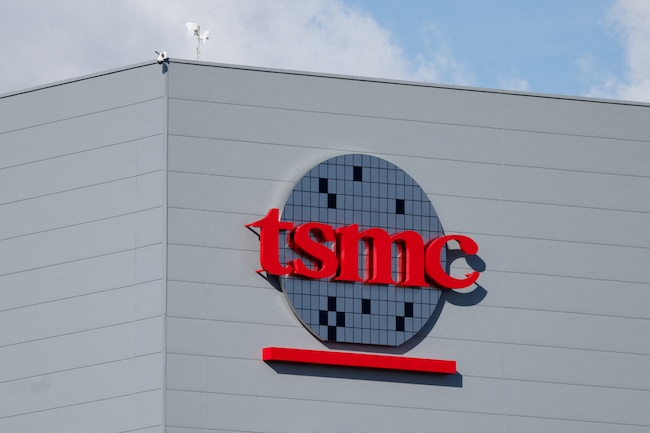
The logo of Taiwan Semiconductor Manufacturing Company (TSMC) is displayed at its fabrication plant in Kaohsiung, Taiwan, June 7, 2025. REUTERS/Ann Wang/File Photo
The computing chips that power artificial intelligence consume a lot of electricity. On Wednesday, the world's biggest manufacturer of those chips showed off a new strategy to make them more energy efficient: Using AI-powered software to design them.
At a conference in Silicon Valley, Taiwan Semiconductor Manufacturing Co, the contract manufacturer that fabricates chips for Nvidia, showed off a range of ways that it is hoping to boost the energy efficiency of AI computing chips by about 10 times.
Nvidia's current flagship AI servers, for example, can consume as much as 1,200 watts during demanding tasks, which would be the equivalent of the power used by 1,000 U.S. homes if run continuously.
The gains TSMC is hoping to achieve come from a new generation of chip designs in which multiple "chiplets" - smaller pieces of full computing chips - using different technologies are packaged together to make one computing package.
But to make use of those technologies, the firms that design chips are increasingly relying on AI-powered software from providers such as Cadence Design Systems and Synopsys, both of which rolled out new products on Wednesday that had been developed in close coordination with TSMC.
For some of the complex tasks in designing chips, the tools from TSMC's software partners found better solutions than TSMC's own human engineers - and did so much faster.
"That helps to max out TSMC technology's capability, and we find this is very useful," Jim Chang, deputy director at TSMC for its 3DIC Methodology Group, said during a presentation describing the findings. "This thing runs five minutes while our designer needs to work for two days."
The current way of manufacturing chips is hitting limits, such as the ability to move data on and off chips using electrical connections. New technologies, such as moving information between chips with optical connections, need to be made reliable enough to use in massive data centers, said Kaushik Veeraraghavan, an engineer in Meta Platforms' infrastructure group who gave a keynote address.
"Really, this is not an engineering problem," Veeraraghavan said. "It's a fundamental physical problem."
(Reporting by Stephen Nellis in Santa Clara, California; Editing by Stephen Coates)
© 2025 by Asian Media Group Inc.
Recent Articles
- Getting Fit Pt. 2 - Raising Our Floor
- South Korea Survives World Cup Scare, Advances to Round of 32
- SpaceX Targets US Consumers with Starlink Mobile Service Push
- Former First Lady Kim Keon Hee Gets 7-Year Jail Term for Bribery
- Iran Reasserts Right to Control Hormuz Passage After Ship Hit Near Oman
- Trump's Cutoff of Clean Energy Tax Credit Drives Rush of New Projects Before Costs Soar
- US May Goods Trade Deficit Widened Sharply on Imports Surge
- VW Eyes 100,000 Job Cuts, Closure of Four Plants in Biggest Overhaul Yet
- Small Aircraft Crashes into Beijing's Tallest Building
- Both Japan and Sweden Advance with Draw