

Hisataka Kobayashi Uses Light to Kill Cancer Cells
By wchung | 24 Jun, 2026
Hisataka Kobayashi has paired a fluorescent dye with cancer-specific antibodies to allow the use of infrared light to destroy cancer cells without harming surrounding tissue.
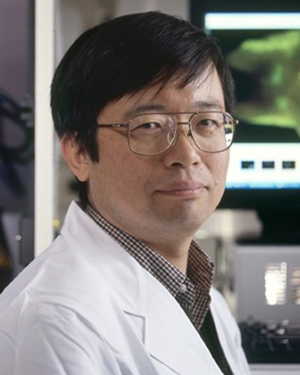
Hisataka Kobayashi is the chief scientist in the Molecular Imaging Program at the National Cancer Institute.
Hisataka Kobayashi has paired a fluorescent dye with cancer-specific antibodies to get around the problem of toxicity in cancer chemotherapy. Exposure to near-infrared light causes the dye to fluoresce and burn holes in the membranes of cancer cells without harming surrounding tissue.
“Normal cells may have a hundred copies of these antibodies, but cancer cells have millions of copies,” says Hisataka Kobayashi, chief scientist of the Molecular Imaging Program at the National Cancer Institute. He led the study published this week in Nature Medicine.
By developing a technique to focus destructive fluorescence only to cancer cells Kobayashi has attained the goal of a two-decade long effort to develop a light-activated cancer therapy that can avoid the collateral tissue damage caused by standard chemotherapy.
Kobayashi’s team used the technique on mice to reduce tumor growth and prolong survival. A few hurdles remains before the technique can be used on humans. HER-2, one of the proteins targeted in the study, is found in only 40% of human breast-cancer cells, so other cancer cell markers will have to be found to pair with the dye. Also, Kobayashi’s study couldn’t be tested on large tumors because killing too many cells at once causes cardiovascular problems in mice.
On the other hand, the dye used in the study can be used to track the treatment’s progress with fluorescence imaging, helping surgeons label cancer cells that may remain after a tumor has been excised.
“It could help clean up the tumor cells that are harder for surgeons to get to,” says Kobayashi.
Hisataka Kobayashi earned an MD in 1987 and PhD in immunology and medicine in 1995 from the Kyoto University. His work is focused on developing novel molecular imaging agents and technologies for targeting cancers. He has published over 200 scientific articles in clinical and preclinical bio-medical imaging over the last 20 years.
© 2026 by Asian Media Group Inc.
Recent Articles
- Micron Forecasts Strong Quarterly Results on Soaring Memory Chip Demand
- Micron and Qualcomm Forecasts Ignite $400 Billion AI Chip Stock Rally
- China Push for Lead in 'Future Industries' Triggers Flood of Venture Capital, Bubble Potential
- 360 Unveils China's Answer to Anthropic’s Mythos
- Venus, Not Mars, Is the Visionary 2nd Earth Play
- Keiko Fujimori's Victory Returns Divisive Dynasty to Peru
- SK Hynix Targets $29 Billion US Listing as AI Demand Surges
- Global Crude Markets Mired in Discounts as Oil Begins Pouring Through Hormuz
- OpenAI Unveils Custom Chip It Designed with Broadcom to Boost Its AI Infrastructure
- US Q1 Current Account Deficit Widened More Than Expected